
Think You Can’t Journal? Think Again!
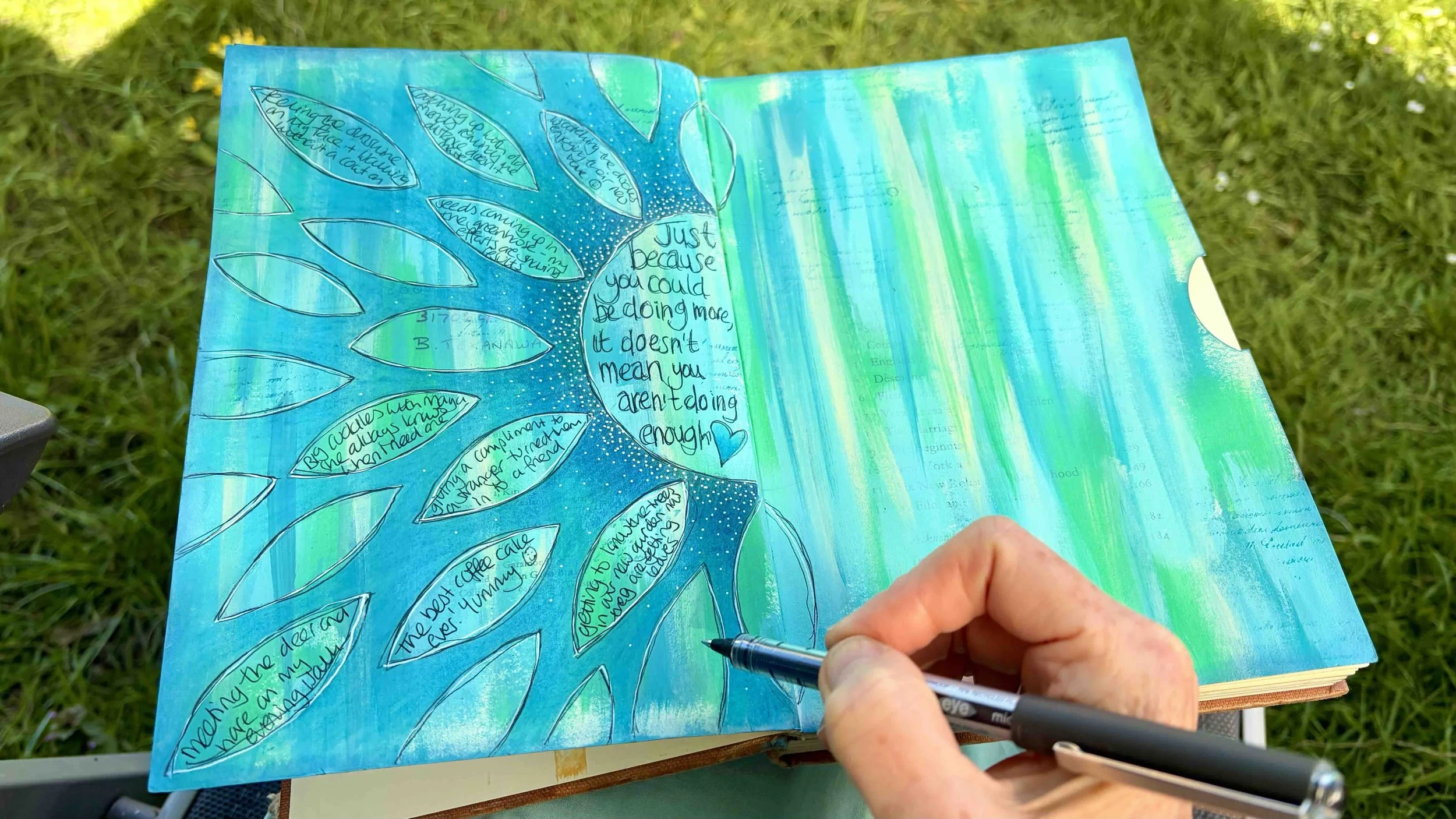
Why creative journalling works for every brain — even if you don’t know what to write or don’t feel creative.
“I never know what to write.”
“I started one but I keep forgetting.”
“I don’t like my handwriting.”
“Everyone else’s looks so pretty… I’m just not creative.”
If you’ve ever thought any of these things, you’re not alone.
In fact, these are some of the most common responses I hear when I suggest starting a gratitude or creative journal.
And honestly? I get it — because I avoided journalling for years for exactly the same reasons.
Somewhere along the way, we’ve picked up the idea that journalling has to look a certain way. That it needs to be consistent, beautiful, thoughtful, or worth sharing.
But none of that is actually true.
What your brain really needs
When you sit down to gently colour, doodle, stick, or write — even for a few minutes — your brain begins to shift into what’s known as the default mode network.
This is the state your brain enters when it’s not focused on “doing,” but instead quietly processing in the background.
It’s where:
Emotions are worked through
Experiences begin to make sense
Ideas and insights start to connect
It’s why clarity often comes when you’re doing something simple with your hands.
Creative journalling gives your brain access to this state — without pressure, without overthinking.
Your hands are occupied, and your mind gets space.
Why you don’t need to be “creative”
Here’s the part most people don’t realise:
Your brain doesn’t care if your page looks good.
The benefits come from the act of creating — not the result.
Simple, repetitive, low-pressure activities like:
Making marks
Layering colour
Tearing paper
Writing a few words
…help calm your nervous system and reduce stress.
In fact, the less pressure you put on yourself to be “good,” the more beneficial it becomes.
This isn’t about performance.
It’s about regulation, expression, and space.
Gratitude and how it rewires your brain
When you practise gratitude — even in the smallest way — you begin to gently shift how your brain sees the world.
Our brains are naturally wired to look for problems. But gratitude helps strengthen pathways that notice what’s working, what’s good, what feels safe.
Over time, this can:
Improve your mood
Increase emotional resilience
Make it easier to notice positive moments in everyday life
And it doesn’t need to be pages of writing.
One sentence.
A few words.
That’s enough.
Memory keeping that actually feels meaningful
When you combine journalling with memory keeping, you’re doing something even more powerful.
You’re not just recording your life — you’re helping your brain store it more deeply.
Using colour, texture, images, and words together activates multiple areas of the brain, making memories:
More vivid
Easier to recall
More emotionally connected
It’s why a small, scrappy journal page can bring back a moment far more strongly than a perfectly posed photo.
So what’s the real problem?
It’s not that you don’t have time.
It’s not that you’re not creative.
It’s not even that you don’t know what to write.
It’s that you’ve never been shown a way to journal that actually works for your brain.
One that feels simple.
Flexible.
Enjoyable.
A different way to journal
This is exactly why I created The Creative Journalling Club - opening 1st May
A space where you can:
Learn easy, no-pressure mixed media techniques (no artistic experience needed)
Understand what’s happening in your brain as you create
Build a journalling habit that feels calming, not overwhelming
Let go of perfection and rediscover play
Ready to join? Head over to my art website, Spirit of Nature Art, to book your place. Don’t worry — it’s still me, just my creative home where you’ll find the same warm, supportive approach.
Because journalling isn’t about perfect pages or perfect words.
It’s about giving your brain what it’s been quietly asking for: space, processing, creativity, and a way to notice the good in your life again.
See you in the club!